Particulars of Vessel
|
|
Name of Ship: |
Official No.: |
| Gross tonnage: |
Net tonnaqe: |
| Summer deadweight: |
| Flag: |
Port of registry: |
Type (Freighter, passenger, tanker, etc.)
Name and address of owner(s):
Name and address of operator(s) or manager(s):
Name and address of agent(s):
|
| Shipbuilders: |
|
| Date of build: |
Where built: |
| Length overall: |
Breadth extreme: |
| Draught summer: |
| Propulsion (steam, diesel, etc.): |
| Number of engines: |
Size (e.g., horse power):
Type:
Engine builders:
Where built:
|
| Particulars of boilers: |
| Type of propeller(s): |
Direction of revolution: |
| |
| Engine(s) Operation/Performance Envelope |
| Knots |
RPM |
Engine(s) at Full speed
Normal mode:
Maneuvering mode:
Engine(s) at Half Speed
Normal mode:
Maneuvering mode:
Engine(s) at Slow speed
Normal mode:
Engine(s) at Astern speed
Slow Astern mode:
Half Astern mode:
Full Astern mode:
Engine(s) at Emergency Full Astern
Emergency Astern mode:
Any troubles with the engine(s):
|
| Navigational/Maneuvering Controls |
| Type |
Location |
Steering apparatus:
Any troubles with it:
Standard compass:
Steering compass:
Any deviation of index of error with steering compass:
Date when last checked:
Course recorder:
Whether operating at time of casualty:
Direction finder:
Whether operating at time of casualty:
Type of echo sounding apparatus:
Whether operating at time of casualty:
Number of gyro repeaters:
|
| Whether operating at time of casualty: |
Operating on what range: |
Distance from face or bridge to stem:
Height of bridge above water at time of casualty:
|
| Navigation lights burning at time of casualty: |
| Watts of Bulb |
Condition of Light |
Mast head light(s):
Range light:
Side lights:
Stern light:
|
Particulars of Casualty
|
|
Original port of departure:
|
Time and date: |
Port of call previous to casualty:
Time and date of departure:
Draft - Fore:
Draft - Aft:
Time and date of casualty:
Draft - Fore:
Draft - Aft:
Location of casualty:
Latitude and Longitude:
Distance and true bearing from charted object, dock, anchorage, etc.:
Body of water (geographical name):
|
| Rules of the Road applicable: __ Inland
__ International |
__ Other (specify) |
Position of sunken ship:
|
| Physical status at time of casualty: |
|
Heading of vessel:
Angle between vessels:
(show by drawing sketch of
vessels with collision angle)
Speed over the ground:
|
| Engine(s) working:__ Ahead
__ Astern: |
RPM: |
Name and number of chart(s) used:
|
| Weather conditions prevailing: |
|
| Clear | /Partly Cloudy | /Overcast | /Fog |
| /Rain | /Snow | /Moonlight | /Other (specify) |
|
| Visibility (miles, meters, yards, etc.): |
| Wind direction: |
Force in knots: |
| Gusty: __ Yes
__ No |
| Tide or Current direction: |
Force: |
| Sea conditions when casualty occurred: |
| Height of sea: |
Height of swell: |
| Direction of sea: |
Direction of swell: |
Did you observe the time of casualty by your watch or clock:
Was it fast or slow by the engine room clock:
Name of pilot; name of Pilot's Association:
Regulating Authority of pilot:
Where was the Captain or Master at the time of casualty:
When did he come to the bridge:
|
| Other personnel on duty at the time of casualty: |
| Name and Rank |
Location |
1.
2.
3.
|
If this case involves a Ship in a Collision:
Other Vessel Struck; Object Struck; Identify
Coast Guard Investigation; Identify investigations by
maritime insurance companies and/or P&I Clubs and/or
other insurance companies whose agents are enquiring |
Name and Location of Ship or Object in Collision
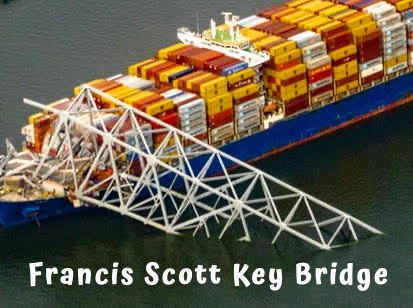 [Port of Baltimore photo]
|
Body of Water where Collision Occured |
Who first sighted the object struck or other vessel:
What was the location of the observer:
How did the observer inform you of the sighting (telephone, orally, etc.):
What time was the object or other ship first sighted:
By radar:
Visually (by eye or glasses):
On what bearing:
Estimated course and speed of the other ship:
Your vessel's compass course and speed at that time:
How would the vessels have passed if no action taken by either?:
Was the Half Distance Rule involved?:
What warnings (and from whom) were given to the Bridge?:
List names of all persons on the Bridge at the time of collision:
Describe all attempts at evasive action before the collision:
Indicate whether intentional criminal action is suspected as the cause of the collision:
|
| What lights of the object struck or other vessel were first seen: |
|
Type:
Distance:
Bearing:
Were they burning brightly:
Sighted by eye or glasses:
|
| Response to sighting: |
| Event: |
Time: |
Helm action (hands on) taken to avoid the collision:
Engine action was taken to avoid collision:
Signals heard from the other vessel:
|
| Personnel involved: |
| Your vessel: |
Other vessel(s): |
Total number of crew:
Deck department:
Engine department:
Steward department:
Total number of passengers:
Others (specify):
Total number of persons dead, injured, or missing:
Location of damage sustained to the vessel:
Any leakage of sea water:
Estimate cost for repairs:
Place where repairs were carried out:
Nature and amount of cargo:
Damage to cargo:

Continue to Case Prep Guide
© 2024 Seattle Maritime Mediation Lawyer, Gary Wolfstone
Gary Wolfstone
 Mr. Wolfstone celebrates his 50th year in WSBA.
A Total Commitment To Quality Mediations
For A Fee That Is Based on Results!
© 2024 Gary Wolfstone

|
